Type 3 Composite Cylinders: The Future of Lightweight, High-Pressure Gas Storage
Type 3 Composite Cylinders
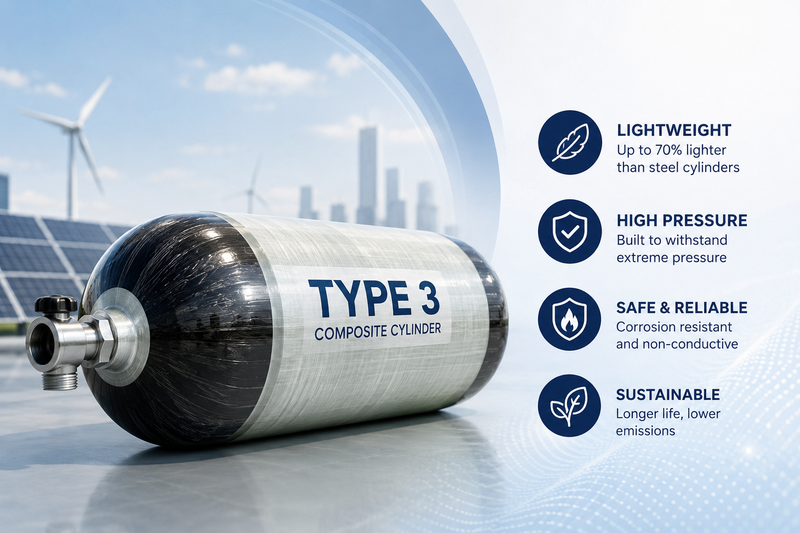

Industries that depend on high-pressure gas storage — medical, defense, aerospace, and industrial sectors — have long been limited by the weight and corrosion risks of traditional steel cylinders. Heavy metal cylinders slow down operations, increase transport costs, and are harder to handle in the field. This is exactly the gap that composite cylinder technology is designed to close.
Superindia Composites addresses this challenge with its Type 3 Composite Cylinders, engineered with an aluminum liner fully overwrapped in carbon fiber and resin. The result is a cylinder that is significantly lighter than steel, resistant to corrosion, and capable of safely storing gases at working pressures of up to 350 bar — all without compromising on structural strength.
What Makes Type 3 Composite Cylinders Different?
Unlike conventional steel cylinders, Type 3 composite cylinders use a hybrid construction approach:
Aluminum liner – forms the inner shell, offering a reliable barrier against gas leakage and corrosion.
Carbon fiber overwrap – wraps around the liner to reinforce structural integrity and pressure resistance.
Resin matrix – binds the fiber layers together, adding durability and impact resistance.
This layered design allows the cylinder to handle extreme pressure while staying dramatically lighter than an all-metal equivalent.
Key Features
Several engineering features set these cylinders apart from traditional gas storage options:
Lightweight Structure – up to 60% lighter than conventional steel cylinders, making transport and handling far easier.
High Pressure Performance – safely rated for working pressures between 300–350 bar.
Durable Design – the carbon fiber shell adds structural strength, while the inner liner resists corrosion and extends service life.
Application Versatility – suitable for medical, UAV, aerospace, defense, and other portable gas storage requirements.
Flexible Capacity Options – available in multiple sizes and can be customized to specific operational needs.
Each of these features directly addresses a pain point that industries typically face with traditional cylinders — weight, corrosion, portability, and rigid sizing.
Why Lightweight Matters
Weight isn't just a convenience factor — it has a direct impact on operational cost and efficiency.
Lighter cylinders reduce fatigue for personnel who handle them manually, such as emergency responders or field technicians.
Reduced transport weight lowers logistics and fuel costs, especially for large-scale deployments.
In aviation and UAV applications, every kilogram saved translates into longer flight time or greater payload capacity.
Easier handling means faster deployment in time-sensitive situations like emergency medical response.
For sectors where portability is mission-critical, this weight reduction isn't a minor upgrade — it's often the deciding factor in equipment selection.
Built for High-Pressure, High-Stakes Applications
Type 3 composite cylinders aren't just lighter — they're built to perform reliably under pressure, literally. The carbon fiber overwrap gives the cylinder the strength to handle pressures up to 350 bar, while the aluminum liner keeps the gas storage safe and leak-resistant over the cylinder's service life.
This combination makes them suitable for use cases where failure simply isn't an option:
Medical & Industrial Oxygen – reliable, lightweight storage for hospitals, clinics, and industrial oxygen supply chains.
Emergency Services & Breathing Apparatus – critical for firefighters and rescue teams who need portable, dependable air supply.
Unmanned Aerial Vehicles (UAVs) – lightweight fuel or gas storage that supports longer flight durations.
Defense & Aerospace Systems – rugged construction suited for demanding operational environments.
The Business Case: Efficiency Beyond the Product
Beyond the technical specifications, switching to composite cylinders makes practical business sense for organizations managing fleets of gas storage equipment.
Lower logistics costs – lighter cylinders mean cheaper freight and easier last-mile transport.
Longer service life – corrosion resistance reduces replacement frequency compared to steel.
Operational flexibility – multiple capacity options mean the product can be tailored rather than forcing a one-size-fits-all approach.
Improved safety margins – consistent pressure performance reduces risk in high-stakes environments like defense and aviation.
For procurement teams evaluating gas storage solutions, these factors often outweigh the higher upfront cost of composite technology compared to steel.
Where Type 3 Cylinders Fit in a Broader Product Ecosystem
Superindia's Type 3 composite cylinders sit within a larger Composite Cylinder Division that also includes LPG composite cylinders, reflecting a broader manufacturing focus on replacing traditional metal components with lighter, more durable composite alternatives across multiple sectors — from telecom reinforcement rods to renewable energy spar caps.
This isn't an isolated product but part of a wider composite materials strategy, which gives buyers confidence that the manufacturing expertise behind the cylinder extends across rigorous, safety-critical industries like defense and aerospace.
Final Thoughts
As industries continue to prioritize efficiency, safety, and sustainability, composite cylinder technology is becoming less of a niche alternative and more of a standard expectation — particularly in sectors where weight and reliability are non-negotiable.
Superindia's Type 3 composite cylinders offer a practical answer to this shift: a product that's lighter, stronger, corrosion-resistant, and adaptable across medical, defense, UAV, and industrial use cases.
Organizations looking to modernize their gas storage infrastructure — whether for emergency response, aerospace operations, or industrial supply chains — will find that the shift from steel to composite isn't just a technical upgrade. It's a strategic one.

Comments
No comments yet. Be the first to comment!